Room setup
A QUIETER CORNER
Start with one surface
You do not need a spa room. You need a corner that, for half an hour, is not doing its usual job. In most homes that means the bathroom, but a bedroom chair, the end of a sofa or even a kitchen stool can work just as well. The trick is to change a few cues so your brain recognises that something different is happening.
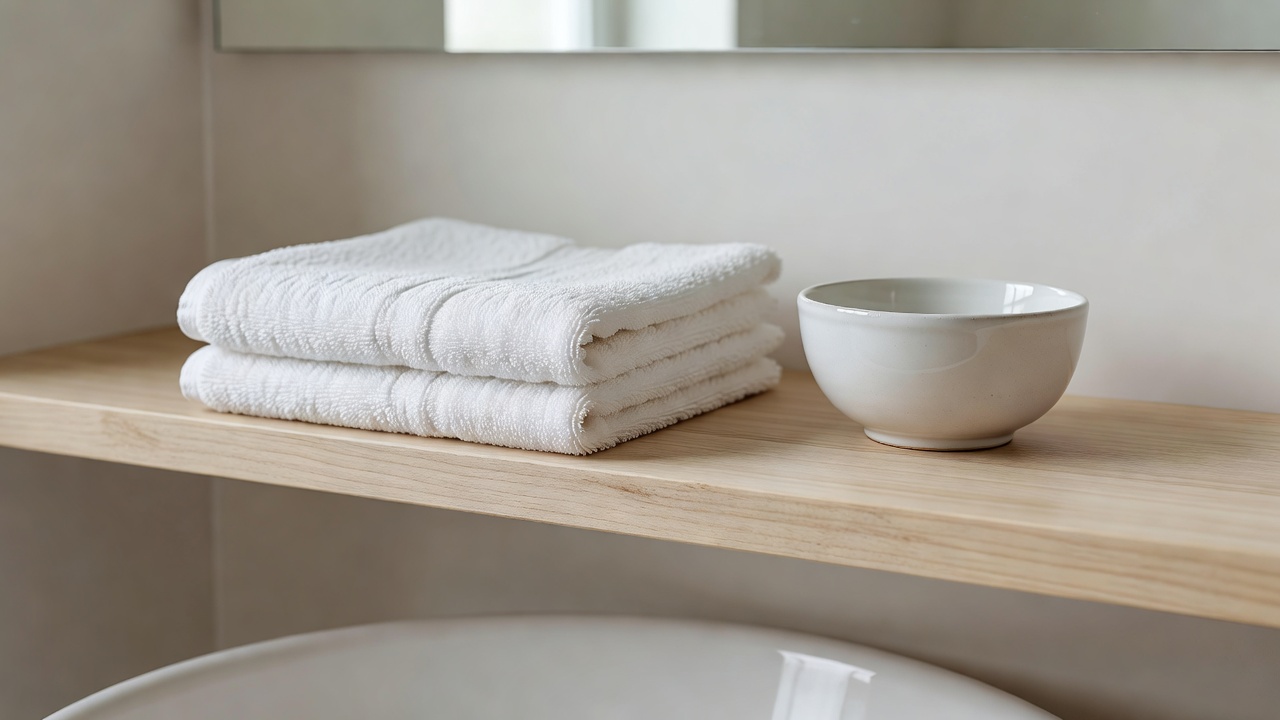
Begin with one surface: the edge of the bath, a bedside table or a tray on your lap. Clear it completely. Put back only what you will use tonight, perhaps a folded towel, a glass of water and a small bowl. Clutter keeps a room in "to-do" mode; an almost empty surface lets it rest. This takes two minutes and costs nothing, which makes it the most valuable step on this page.
If you share your home, a closed door and a quick "I'll be thirty minutes" helps more than any decoration. Interruptions are the main reason home spa time feels less restful than a visit somewhere else.
Light: lower and warmer
Bright overhead bulbs belong to the morning rush. In the evening, switch them off and use one lamp, ideally with a warm-white bulb, placed low. Light that comes from the side rather than the ceiling feels softer and casts gentler shadows. If you only have a ceiling light in the bathroom, leave the door slightly open with a lamp on outside, or use the light from a hallway.
Daytime rituals are easier still. A thin cotton curtain or a pale sheet over a window turns harsh sun into diffuse, even light. The Danish idea of hygge, often translated as cosiness, leans heavily on this kind of soft, low light, and it is a helpful reference because it is about atmosphere rather than products.
Candles, safely
Candles are traditional but not essential. If you use them, keep them on a stable, heat-resistant dish, at least a forearm's length from towels, curtains and hair, and out of reach of children and pets. Blow them out before you get into the bath or close your eyes. The National Fire Protection Association and the UK's Royal Society for the Prevention of Accidents both stress never leaving a lit candle unattended. Battery tea lights give a similar glow with none of the risk.
If you might doze off, choose a lamp instead of a flame.
Sound, scent and warmth
Sound. Decide on purpose rather than by default. Steady background sounds such as a fan, recorded rain or gentle instrumental music can mask traffic and voices. Spoken audio works for some people and keeps others too alert. Silence is underrated. Whatever you choose, set it up before you start so you are not reaching for a phone halfway through.
Scent. A bathroom does not need perfume to feel calm. Fresh air from a window opened for five minutes beforehand, the smell of clean laundry, or a mug of mint tea nearby is plenty. Scented candles, sprays and diffusers can trigger headaches or irritate asthma in some people, and several essential oils are unsafe around cats and dogs. When in doubt, leave scent out.
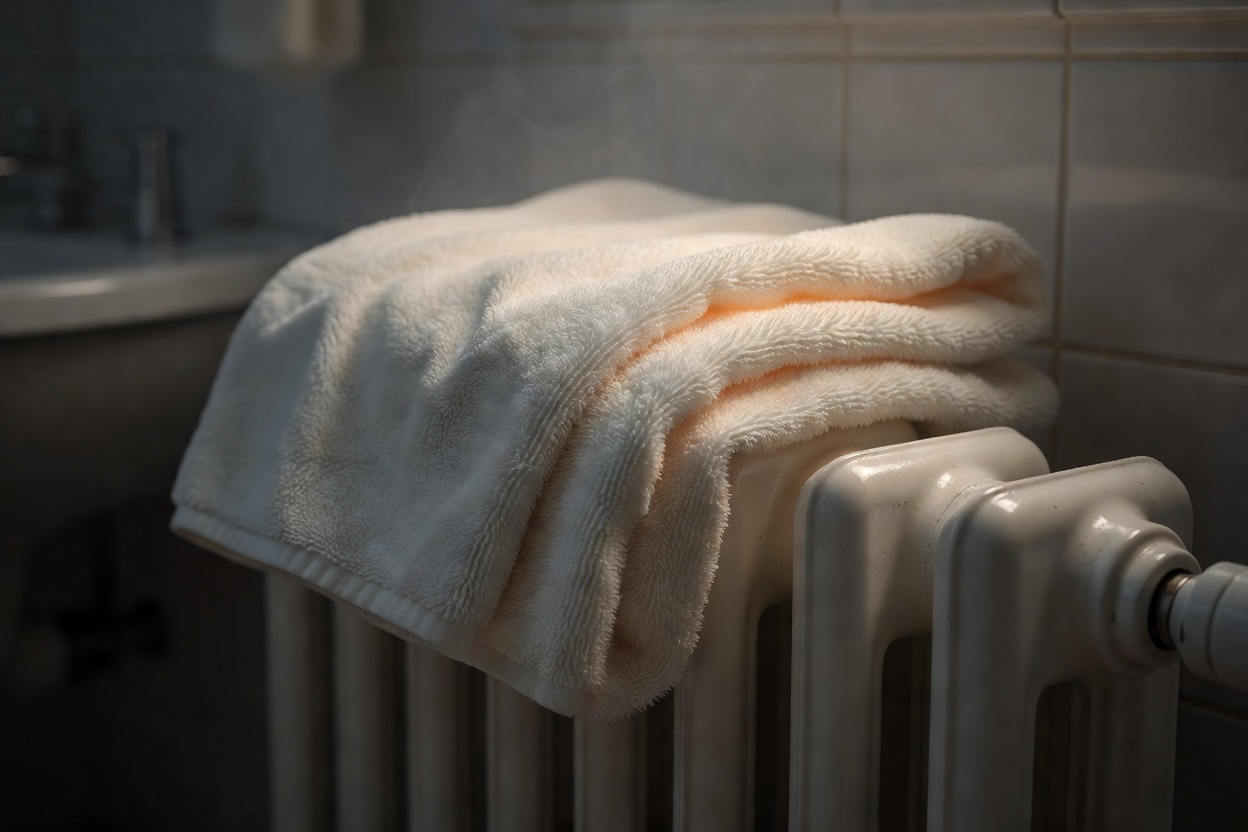
Warmth. Feeling cold undoes relaxation quickly. Warm the room a little first, and put your towel on a radiator, heated rail or in the tumble dryer for a few minutes. Keep socks or a jumper within reach for afterwards; the moment you step out of warm water is when you notice the chill most.
A five-minute setup checklist
- Clear one surface.
- Switch to a single low lamp.
- Warm a towel and the room.
- Choose sound or silence.
- Put the phone in another room.
- Place water to drink within reach.
Floors, steps and small safety habits
Water, oil and tiles are a slippery combination. Lay a bath mat or an old towel where you will step out, and wipe up any oil from scrubs before walking around. If you are using an oil-based scrub in the bath or shower, rinse the tub afterwards so the next person does not slip.
Keep electrical items such as heaters, speakers and hairdryers well away from water. A phone balanced on the bath edge is a common way to lose a phone and an avoidable risk with a charger attached. Better to choose your music, start it and leave the device outside the splash zone.
Finally, give yourself an ending. Folding the towel, rinsing the bowl and switching off the lamp closes the ritual and makes the next one easier to start. When you are ready to try it, our slow routines fit neatly into the space you have just made.